Hidden France
Discover France away from the well-trodden paths, and you’ll fall for it anew.
Our selection of parcs across France opens the door to the country's hidden heart – the France that is still there, if you know where to look. France is where our story began. And it’s a country we never tire of exploring.
Our Hidden France parcs are places where you'll discover what French life actually feels like: the weekly market where cheese-makers offer tastes of their farm's production, the village boulangerie where bread is still baked twice daily, the river beaches just made for lazy picnics and the sun-dappled squares of centuries-old towns.
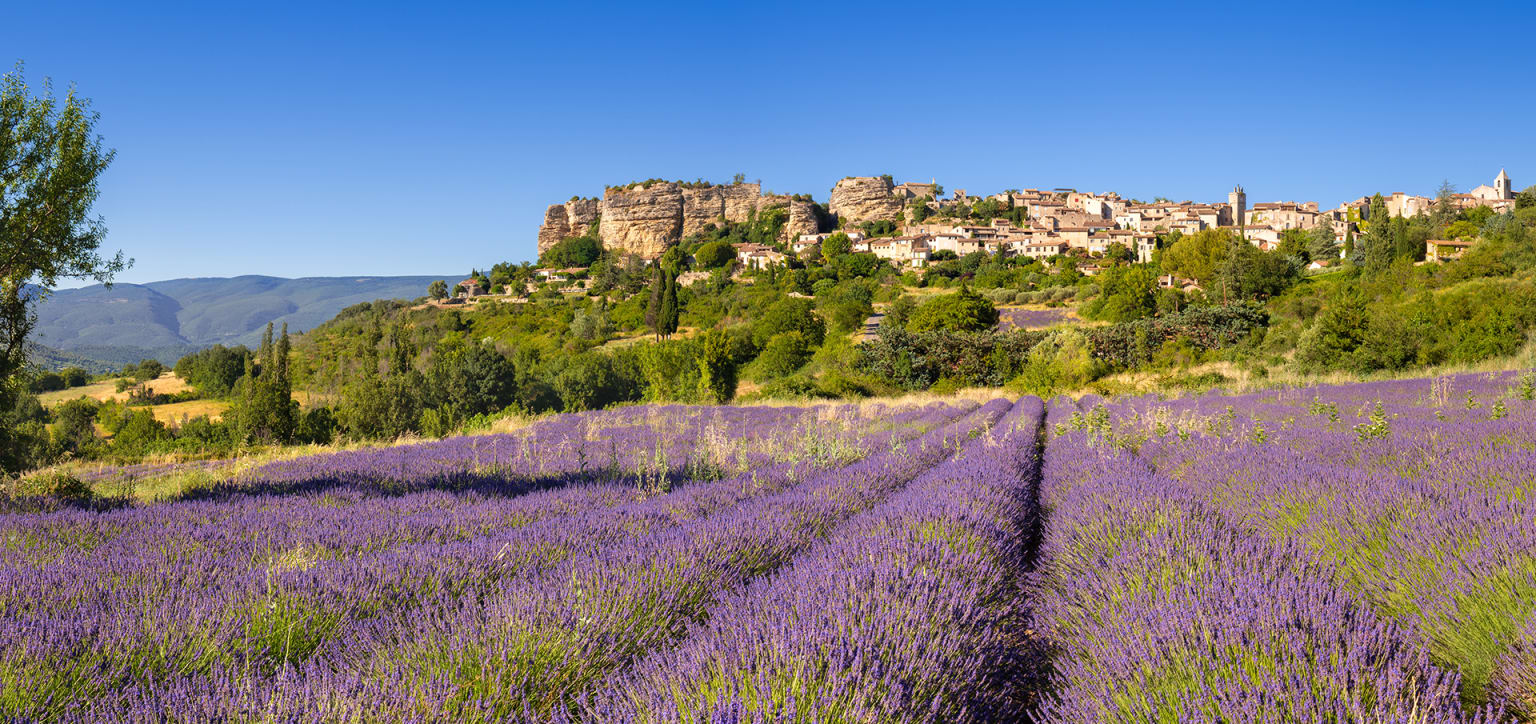
From the gently rounded peaks of the Vosges to Brittany's Celtic coastlines sweetly scented with freshly made crêpes, or Provençal hills where medieval villages cling to rocky outcrops – our Hidden France parcs bring the real country even closer to your door.
Brittany, France
Why go
Brittany is a region of dramatic coastlines, not unlike farthest Cornwall. While not ‘hidden’ per se, it’s fair to say Quimper is more under the radar than, say, Mont-Saint-Michel in the north. The cultural capital of Cornouaille, the city sits where the Odet and Steir rivers meet, its half-timbered houses and Gothic cathedral surrounded by authentic Breton life. You’ll hear that Breton language keeping ancient customs alive, fiercely and proudly! The surrounding coast offers some of France's most beautiful beaches – from the wild drama of Pointe du Raz to the sheltered coves of the Glénan Islands.
Our favourite things to do
Explore Quimper's old town with its cobbled streets, faïence pottery workshops and the magnificent Gothic cathedral of St-Corentin.
Drive to Pointe du Raz, the dramatic westernmost point of France where Atlantic waves crash against granite cliffs – it's raw and powerful.
For gentler beauty, visit Locronan, a perfectly preserved medieval granite village that seems frozen in the 15th century.
Recommended parc: Le Port de Plaisance
Your parc sits in lovely coastal woodlands, close to the walled city of Concarneau, and an easy drive to the Breton cultural capital of Quimper.
Vosges, France
Why go
The Vosges mountains’ rounded, forested peaks mark the border between Alsace and Lorraine, creating landscapes of deep valleys, crystal lakes, and villages where Germanic and French influences blend beautifully. It’s a blissfully undiscovered region, and so easy to reach. It’s also witnessed centuries of border shifts and cultural exchange, resulting in architecture, cuisine, and traditions that feel distinctly regional - and unlike anywhere else in France. Lakes like Gérardmer and Longemer offer swimming and watersports, while the forests bring endless hiking and cycling possibilities.
Our favourite things to do
Hike to one of the Vosges' rounded summits – the Ballon d'Alsace or Hohneck offer relatively gentle climbs with spectacular views.
Visit a traditional ferme-auberge in the high pastures where you can taste Munster cheese being made.
Explore the Route des Crêtes, the scenic mountain road that follows the ridgeline with views that stretch to the Black Forest on clear days. Lake Gérardmer offers beaches and boat hire.
Recommended parc: Domaine des Bans
Your delightful base is neatly tucked between Concarneau and Pont-Aven, with a restaurant serving traditional Breton fare - crepes, seafood and creamy deserts. Close to terrific beaches, this is a great spot to start your adventures from.
French Alps, France
Why go
Bourg d'Oisans is where the Alpine peaks meet the rivers and valleys of eastern France. Surrounded by some of the Tour de France's most legendary cols, this is a landscape of vertical rock faces, glacial valleys, and mountain villages. The Oisans region feels genuinely Alpine – this is a working mountain area where farming traditions continue. Wildflower meadows explode with colour, hiking trails lead to crystalline mountain lakes, and cyclists tackle the famous hairpin bends of Alpe d'Huez. The nearby Écrins National Park protects some of France's wildest terrain, perfect for hikes.
Our favourite things to do
For hikers, the trail around Lac Lauvitel in the Écrins National Park is stunning. You’ve views, wooden glens and rushing rivers in store!
Visit the pretty mountain village of Vaujany with its traditional chalets and summer pastures. The weekly market in Bourg d'Oisans offers proper mountain produce – Beaufort cheese, cured meats, and local honey.
Recommended parc: Le Belledonne Campsite
Your Alpine parc sits in the heart of the Oisans valley, surrounded by dramatic mountain scenery and perfectly positioned for exploring the French Alps.
Dordogne, France
Why go
It’s hard not to fall under the spell of the Dordogne , with its river valleys lined with medieval castles, villages built in honey-coloured stone, and a cuisine that’s divine. Argentat sits on the Dordogne River in the quieter Corrèze department, where tourists thin out a little. This is a working riverside town with a bustling Thursday's market. The surrounding countryside rolls with wooded hills, hidden valleys, and villages perchés (perched villages) that crown every prominent hilltop. History is everywhere: prehistoric caves, medieval fortresses, and Renaissance châteaux all within easy reach.
Our favourite things to do
Canoe down the Dordogne from Argentat – the river here is gentle and scenic, passing beneath Château de Gibanel's towers and through landscapes of wooded valleys and rocky outcrops.
Drive to Collonges-la-Rouge, one of France's Plus Beaux Villages – it's genuinely stunning. Visit Turenne, another hilltop gem with medieval streets.
Recommended parc: Château du Gibanel
Your château-based parc sits in its own grounds beside a the Dordogne River, offering direct access to one of France's most beautiful valleys.
Gironde, France
Why go
The Médoc is more than just wine (though the wine is reason enough to visit!). This tongue of land between the Atlantic and the Gironde estuary offers a landscape of endless pine forests, wild Atlantic beaches, and wine châteaux whose names read like a sommelier's dream. Vensac sits in the northern Médoc, away from the grand wine estates, where the Atlantic influence is stronger and life remains refreshingly low-key. The beaches here are magnificent – vast stretches of sand backed by dunes and pine forests, with powerful Atlantic surf and space to breathe. Inland, the forest offers shaded cycling and walking, while the lakes and marshes attract wading birds. To the south, the famous wine châteaux around Pauillac and Margaux offer tastings.
Our favourite things to do
Cycle through the pine forests to the Atlantic beaches – the dedicated cycle paths make it easy and safe.
Visit the wine châteaux: even if the grand estates feel intimidating, smaller family-run domaines offer warm welcomes.
Explore the estuary-side villages like Talais where fishing culture continues. For markets, head to Lesparre-Médoc on Saturday mornings.
Recommended parc: Le Vieux Moulin
Your easy going parc with a lagoon pool sits among the Médoc's pine woods, perfectly positioned between Atlantic beaches and wine country.
Aveyron, France
Why go
Millau sits where limestone plateaux meet in one of France's most spectacular natural settings. The town straddles the Tarn River, dominated by the stunning modern viaduct that soars 343 metres above the valley – the world's tallest bridge and an engineering marvel. This is outdoor France: rock climbing on the limestone cliffs of the Gorges du Tarn, and hiking through landscapes of Mediterranean scrub and canyon drama. The Aveyron is authentically rural, a département where small-scale farming continues and traditional crafts (including Millau's famous glove-making) survive. Nearby, the Larzac plateau offers empty horizons and Templar villages, while the Gorges de la Jonte and Dourbie provide yet more spectacular canyon scenery.
Our favourite things to do
Explore the Gorges du Tarn by kayak or on foot, where limestone cliffs soar above the river and medieval villages like Ste-Enimie cling to the canyon walls.
Visit the Templar town of La Couvertoirade on the Larzac plateau, a perfectly preserved fortified village.
The market in Millau offers provincial atmosphere with local cheeses (Roquefort is made nearby), charcuterie, and produce.
Recommended parc: Millau Plage
Your riverside parc sits on the banks of the Tarn beneath the spectacular Millau Viaduct, offering direct river access and a perfect base for exploring the Aveyron.
Tarn, France
Why go
Tarn is rural France at its most peaceful – a département of deep river gorges, bastide towns, and countryside that rolls between vineyard and forest with a pleasing, unhurried air. Nages is in the Gaillac wine region, surrounded by landscapes of oak woods, sunflower fields, and medieval villages built in rose-coloured brick. This is genuinely unspoiled territory: no tour buses, no international crowds, just authentic French provincial life continuing as it has for centuries. The nearby Albi, with its extraordinary fortress-cathedral and Toulouse-Lautrec Museum, offers cultural treasures, while the Tarn Gorges to the east provide dramatic natural beauty.
Our favourite things to do
Visit Albi, the remarkable brick-built city whose cathedral looks more fortress than church and whose Toulouse-Lautrec Museum houses the world's largest collection of the artist's work.
Explore the bastide town of Cordes-sur-Ciel, which lives up to its name (Cordes in the Sky).
Recommended parc: Rieumontagné
Your countryside parc with its own lake sits amid the rolling Gaillac wine region, offering peaceful surroundings and access to the Tarn's unspoiled landscapes.
Provence, France
Why go
Provence needs no introduction, but this part – the Lubéron – remains refreshingly real despite its beauty. Cadenet sits on the Durance River in the southern Lubéron, surrounded by landscapes of vineyards, cherry orchards, and those hilltop villages perchés that define the region. This is a working countryside where market gardening, wine-making, and lavender cultivation continue as genuine economic activities. Nearby villages like Lourmarin and Ansouis offer perfect Provençal scenes: stone houses with painted shutters, shaded squares where pétanque players gather, and restaurants serving cuisine that celebrates local produce.
Our favourite things to do
Explore the Lubéron's hilltop villages: We love Lourmarin with its Renaissance château and Friday market, while Ansouis offers dramatic hilltop views without the crowds.
The weekly markets of Lourmarin and Cadenet sell everything from lavender honey to local cheeses and the season's produce.
Recommended parc: Le Val du Durance
Your Provençal parc sits in the heart of the Lubéron, with a private sandy lake beach, surrounded by authentic countryside and perfectly positioned for exploring the hilltop villages.


